
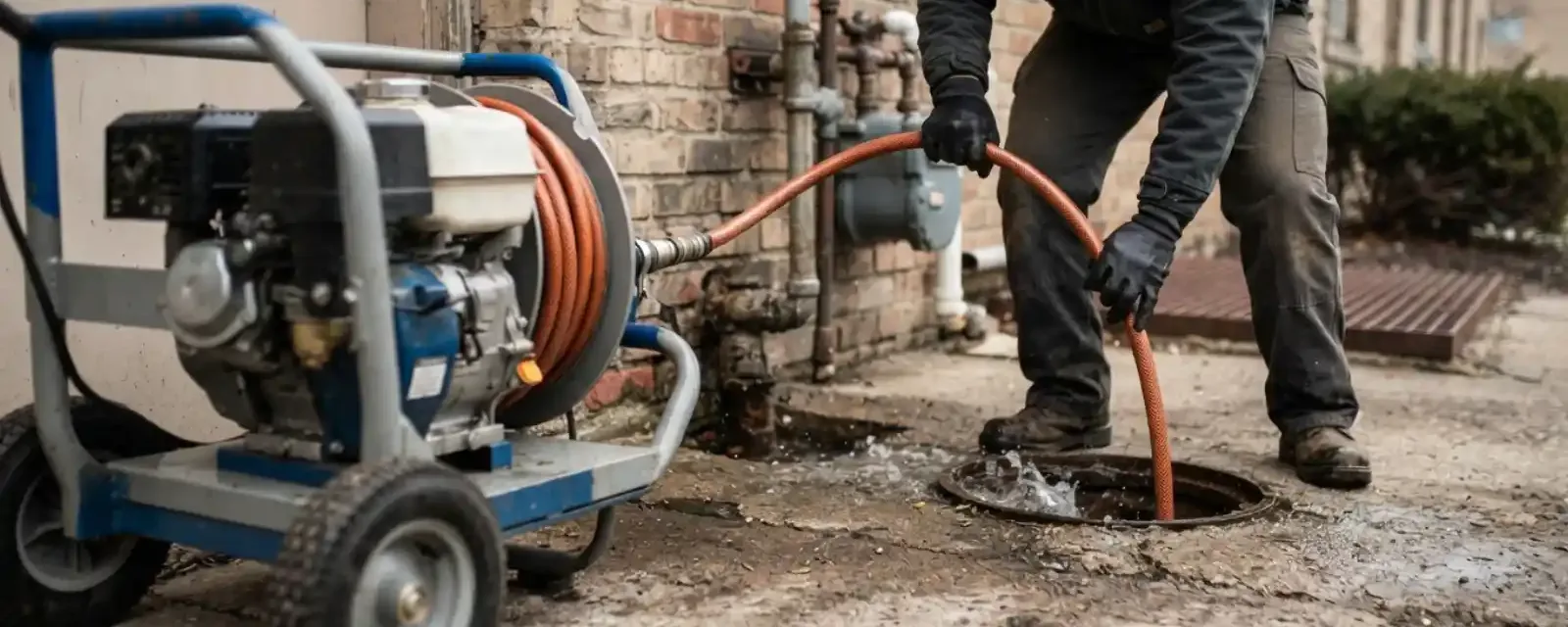
Sewage backing into a tub, shower or floor drain is an emergency, and the Kuna Express Plumbing phone is answered 24/7 for it. While you wait, stop running water everywhere in the house, including the washing machine and dishwasher. Keep children and pets out of any room with standing sewage, and stay away from wet outlets or cords. Dispatch will ask which fixtures are affected, because the lowest drain in the house usually tells the story.
Sewer backup: what to do first
Water has only one way out when the main line is blocked, and it takes the lowest opening it can find. That is why a basement drain, a ground-floor shower or the toilet nearest the main often fills first.
Do these things in order:
- Stop using water in the house.
- Flush nothing else and run nothing that drains.
- Open windows if the smell is strong, and keep people out of the wet area.
- Find the cleanout if you know where it is, but do not open it while pressure is behind it.
- Call the 24/7 line and tell dispatch what is backing up.
Do not use chemical drain cleaner. It stays in a full pipe and becomes a hazard for the person who opens the line.
Is it the city main or your own line?
The City of Kuna Wastewater Division operates the public sewer mains, and the city sewer emergency line is (208) 573-1511. Your own line runs from the house to the point where it joins that main. Everything on your side is yours to clear or repair.
There is a simple check. If neighbors on your street are backing up too, call the city first. If only your house is affected, the blockage is most likely in your own line, and a plumber with a cable machine and a camera can find out where.
Signs the main line is clogging
A main line rarely fails without warning. The early signs are slow drains in more than one room, a toilet that gurgles when the shower runs, and a drain that clears, then fills again within days.
Gurgling is air being pushed back through traps as water struggles to leave. A bubbling toilet when the washing machine drains is a classic hint that water has nowhere to go. If you see two of these signs together, treat it as a main line problem rather than a one-fixture clog.
Whole house draining slowly?
Call the 24/7 line and describe which drains are slow or backing up.
How sewer line cleaning is done
The method matches the blockage. Here is how the usual tools compare.
| Tool | Best for | Limit |
|---|---|---|
| Cable machine | Soft clogs, paper and a first pass to open the line | Can leave grease and root growth on the pipe wall |
| Camera | Seeing what is in the line before and after clearing | Needs the line open enough to pass |
| Hydro jetting | Grease, scale and root growth coating the full pipe | Not for pipe that is cracked, collapsed or very fragile |
A plumber usually starts with a cable to open the line, then runs a camera to see what caused the blockage. If the camera shows buildup along the wall, a pass of hydro jetting cleans the whole pipe instead of leaving a narrow channel. We explain the choice before work starts.
Roots in the sewer line
Roots find a joint with even a tiny gap, because the pipe carries water and nutrients. Once inside, they thicken and catch paper and waste until the line stops. Cutting the roots clears the line, but they grow back unless the joint is sealed or the pipe is repaired.
That is why a root clog often returns within a year or two. If the camera shows repeated root entry, the conversation shifts from cleaning to sewer line repair, where a damaged joint or section can be sealed, lined or replaced. We would rather show you the footage than sell you a fix you do not need.
Grease, scale and paper
Grease cools in the line and builds a coating that narrows the pipe. Scale from minerals can add to the roughness inside older sections. The City of Kuna water quality report says all of southern Idaho has hard water because of naturally occurring calcium, so a camera look at the pipe wall is worth it when a line keeps slowing.
Wipes labeled flushable are a common cause, too. They do not break down like paper and gather at joints and bends. If the footage shows wipes or a rag wad, we tell you so you can stop the cause.
Safe steps while you wait
Stop all water use. Do not stand in sewage with wet shoes near outlets or cords, and do not mix cleaning chemicals to mask the smell. Take photos of any damage for your records. If you smell natural gas, leave the house and call 911 or Intermountain Gas first.
What sewer line cleaning costs
Landlords, managers and repeat backups
A backup in a rental unit usually reaches the owner by phone at a bad hour. Tell dispatch you are the owner or manager and give the unit address. The plumber reports in plain language what was blocking the line and whether it came from the building pipe or from what went down the drain, which helps you decide next steps.
If the same line backs up again, ask for a sewer camera inspection so you know whether cleaning is enough.
Sewer cleaning for Nampa and nearby towns
We also take calls in Nampa and the Treasure Valley, and the Nampa plumber page explains how dispatch covers that area. Our service area page lists the towns served. For a single slow sink or tub, drain cleaning covers the first steps. A cleanout and the line behind it are part of what the 2017 Idaho State Plumbing Code, based on the 2015 UPC, expects a sewer to have, and a plumber looks for one before running a cable.
Sewer line cleaning questions from Kuna homeowners
Yes. The line is answered 24/7, including weekends and holidays. Tell dispatch what is backing up and whether sewage is entering the house, and a plumber will be scheduled and told how to stay safe while waiting.
If neighbors are also backing up, call the City of Kuna sewer emergency line at (208) 573-1511. If only your house is affected, the blockage is most likely in your own line, and a plumber can clear it and camera the pipe.
Same-day appointments are offered when the schedule allows, and active sewage backups are treated as emergencies. Call and describe what is happening.
Roots, grease buildup, a sagging section or a damaged joint are the usual causes. A camera shows which one, and repeat clogs are a sign that cleaning alone may not be enough.
It clears the roots from the pipe, but they come back if the joint is still open. A repair or lining of the joint is what stops the cycle.
Clearing a blockage is different from repairing the pipe, but a repair may need a permit in Kuna. Ask the Kuna Building Department at (208) 922-5546 about your job.