
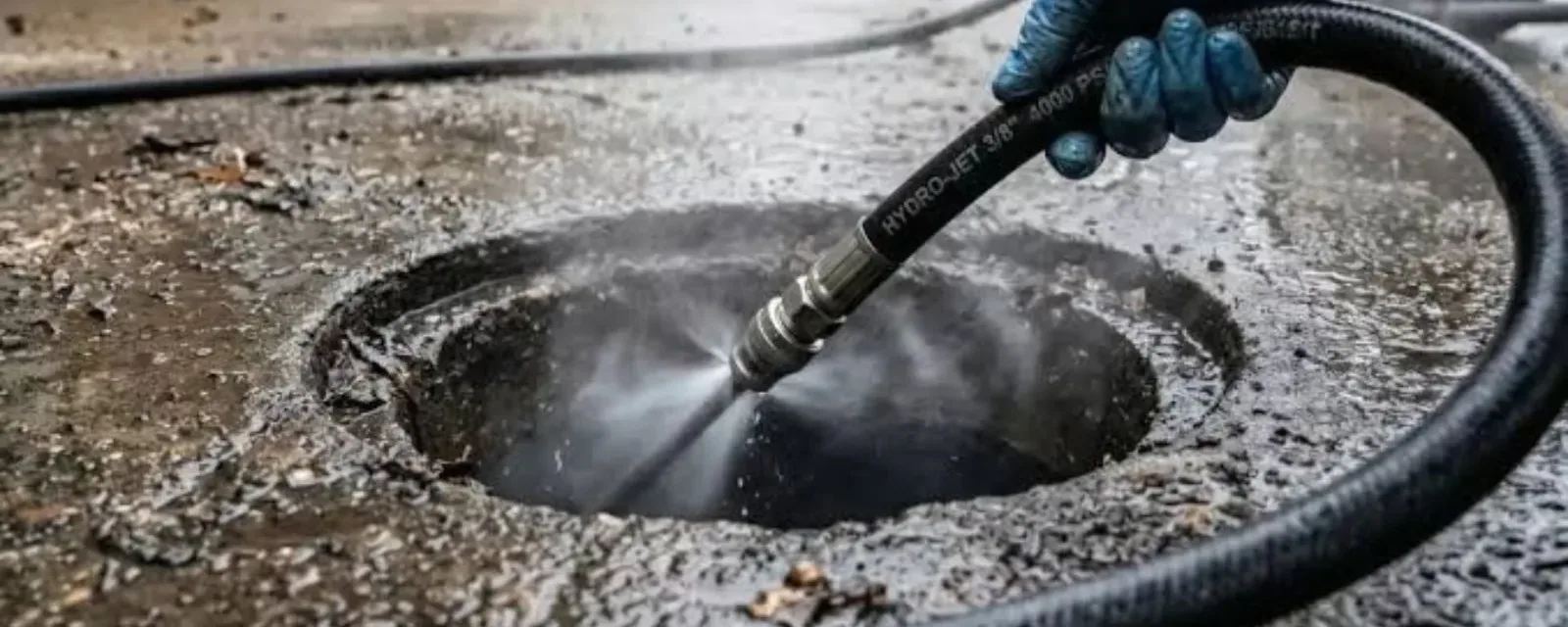
Most people do not search for hydro jetting by name. They search because a drain cleared last month is slow again, or the main line gurgles every time the washer drains. If sewage is coming up right now, this is an emergency, and the Kuna Express Plumbing phone is answered 24/7. Stop running water and keep people away from any standing sewage until the plumber arrives.
Symptoms that point to jetting, not another cabling
Hydro jetting is a cleaning method, not a repair, so the question is whether your symptoms match the problem it solves. These signs usually do:
- The same drain or main line clogs again within weeks or months of being cabled.
- Water drains, but slowly, and the whole house seems sluggish rather than one fixture.
- Toilets or tubs gurgle when another fixture drains, which suggests a narrowed pipe.
- A cable went through, but a camera showed grease or scale still coating the wall.
- A sewer smell returns even though nothing is blocked.
Jetting is the better tool when the pipe is narrowed by buildup rather than plugged by one object. If you have one slow sink, start with drain cleaning instead.
Repeat clogs: what is really going on
A cable pushes a channel through a clog and leaves. The coating along the walls stays, and it catches the next load of paper or grease. That is why the same line can clog every few weeks after cabling.
Roots do something similar. A cable chews through the middle of a root mat, and the rest keeps growing. Jetting uses a nozzle that sprays water in several directions to scour the pipe wall all the way around, so the opening is restored and not just poked through. We explain which problem the camera shows before suggesting it.
Slow main line and gurgling drains
When the main line narrows, every fixture feels it. A shower that drains slowly while the toilet gurgles is air and water competing for the same restricted pipe. This is different from a single clogged sink, where only one fixture misbehaves.
If you see the pattern across the house, the problem is probably in the main. Our sewer line cleaning page covers what happens when sewage is already backing up, and jetting may be the follow-up that clears the buildup behind the immediate blockage.
Same clog keeps coming back?
Call the 24/7 line and tell dispatch how often it returns.
Jetting compared with cabling
The two tools solve different problems. This table shows when each one fits.
| Tool | Best for | Weak spot |
|---|---|---|
| Cable machine | A single soft clog or a first pass to open a stopped line | Leaves buildup on the pipe wall, so clogs can return |
| Hydro jetting | Grease, scale and root growth coating the full pipe | Needs sound pipe and access, and is not a repair for damage |
| Camera | Seeing what is in the line before choosing a tool | Cannot clean anything on its own |
Cabling is quick and fine for many clogs. Jetting costs more effort and equipment, so we recommend it when the evidence says a cable will not hold.
When jetting is the wrong choice
Jetting is not right for every pipe. High-pressure water can stress a line that is already weak, and it will not fix a pipe that has already failed.
We hold off on jetting in cases like these:
- The camera shows cracks, offset joints or a collapsed section.
- The pipe is very old, brittle or made of a material that has deteriorated.
- A cleanout is missing and there is no safe way to reach the line.
- Water would escape through a broken section into the soil.
In those cases the honest fix is a different tool, often a gentler cleaning followed by sewer line repair. A plumber has to see the pipe first, and that is not something we can judge over the phone.
Seeing the pipe before the jet
We camera the line before jetting whenever we can. The footage shows what is coating the wall, whether there are damaged sections and where roots enter. That decides whether jetting is safe and useful.
A sewer camera inspection can also be done on its own if you are not sure the problem is clogging at all. After jetting, a second camera pass confirms the line is open and shows any weak spots the cleaning uncovered.
Safe steps while you wait
Stop running water into a line that is backing up. Skip chemical drain cleaner, which sits in a full pipe and is a hazard to whoever opens it. Keep children and pets away from standing sewage and wet outlets. A gas smell means leave the house and call 911 or Intermountain Gas before you call us.
Hydro jetting in Kuna homes
The City of Kuna water quality report says all of southern Idaho has hard water because of naturally occurring calcium. Over time, minerals can add roughness inside older drain lines, which gives grease and paper more to catch on. That is not the only cause of a stubborn clog, but it is one reason a camera look at the pipe wall is worth doing before jetting.
A newer home can still have a stubborn line. When a young pipe keeps clogging, the cause is often a joint, a sag or a root entry point that jetting alone will not cure.
What hydro jetting costs
Jetting calls from Nampa and nearby towns
We also work in Nampa and across the Treasure Valley. The Nampa plumber page explains how dispatch covers that side, and our service area page lists the other towns served. According to the 2017 Idaho State Plumbing Code, based on the 2015 UPC, drain lines must be sized and sloped to carry waste, so a camera look before jetting tells you whether a belly or break is the real problem.
Hydro jetting questions from Kuna homeowners
Yes. The line is answered 24/7, including weekends and holidays. Tell dispatch whether sewage is entering the house, and the plumber will advise what to do while they travel. Jetting itself depends on the pipe condition the plumber sees.
Possibly. A repeating clog often means buildup is coating the pipe wall, and jetting cleans that wall. A camera look first shows whether buildup, roots or a damaged pipe is the cause.
Gurgling usually means air is being pushed through traps because the pipe has narrowed. That can come from grease, scale, roots or a sag, and a camera is how a plumber tells which.
A cable pokes through a clog, while jetting uses high-pressure water to scour the full pipe wall. Cabling suits simple clogs. Jetting suits coating and repeat problems.
Not always. A line that is cracked, brittle or collapsed can be damaged by high pressure, so the plumber needs to see the pipe first. Where jetting is unsafe, a gentler method or a repair is the better answer.
It clears roots from inside the pipe. They can grow back if a joint still lets moisture in, so repeated root clogs call for sealing or repairing that joint.