
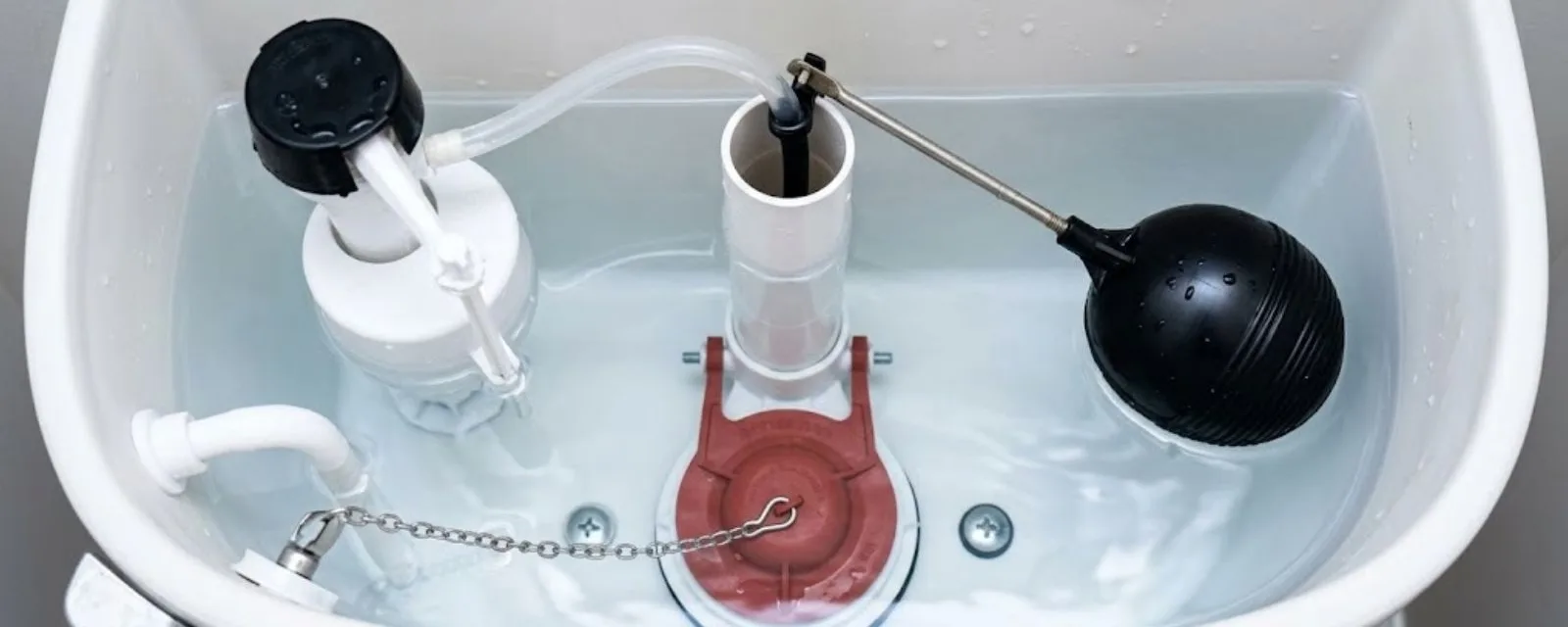
Removing and installing a toilet means shutting off the water, emptying the tank and bowl, unbolting the toilet from the floor, replacing the wax ring, checking the closet flange, setting the new toilet and tightening it evenly. The job takes a few steps and a careful hand. It goes wrong when the flange is cracked, the floor is soft or the bolts are over-tightened and crack the bowl.
If your toilet already rocks, leaks at the base or smells of sewer, the cause is often the wax ring or the flange. Reading the steps below tells you whether you are looking at a simple reset or something that needs a plumber.
Tools and prep before you start
Gather everything before you shut off the water. A toilet is heavy, and a leaking tank is a bad moment to hunt for a wrench.
You will need:
- An adjustable wrench or socket set.
- A putty knife and rags.
- A new wax ring or a wax-free seal rated for your flange.
- New closet bolts and a level.
- A bucket and a sponge.
- Gloves and a helper to lift.
Clear the room, lay an old towel on the floor and confirm that the shutoff valve under the tank turns. A stuck valve is a reason to stop, because forcing it can break the valve and flood the room.
How a toilet is removed
Start by closing the shutoff valve and flushing to empty the tank. Hold the handle down and sponge out what remains in the bowl and tank so nothing spills when you lift.
Disconnect the supply line, loosen the nuts on the closet bolts and rock the toilet gently to break the old seal. Lift straight up with a helper and set it on a towel or cardboard. Stuff a rag in the drain opening to block sewer gas while you work.
Inspecting the flange
Scrape off the old wax ring and look closely at the closet flange, which is the ring on the floor that the toilet bolts to. This is the step most DIY jobs skip, and it is the one that decides whether the new toilet will hold.
A sound flange sits level with or slightly above the finished floor, is firmly screwed down and has no cracks, rust or broken slots. A flange that is cracked, corroded or below floor level will not seal properly, and no wax ring will fix that.
Stop and call a plumber if you see this
These findings mean the repair goes beyond a swap.
- The flange is cracked, broken or rusted through.
- The floor around the toilet is soft, stained or spongy.
- The drain pipe below the flange is loose or leaking.
- Water or a sewer smell is coming from the floor, not the base.
Installing the new toilet
Set a new wax ring on the flange or on the toilet horn, following the maker's instructions. Place new bolts in the flange slots, lower the toilet straight down onto them and press with your weight, not a hammer.
Check that the toilet is level. Thread washers and nuts on gradually, alternating sides, and stop when it feels firm. Overtightening is the main way people crack a new bowl.
Connect the supply line, open the valve slowly, let the tank fill and flush several times. Look for water at the base, the supply line and the tank bolts.
Wax ring, wax-free and other options
| Seal type | Best for | Watch out for |
|---|---|---|
| Standard wax ring | Flange at or above floor level | Reusing a ring after a toilet has moved |
| Thick or extra-height wax | Flange slightly below floor | Too much wax can squeeze into the drain |
| Wax-free seal | Repeat removal, uneven spots | Check it matches your flange and drain |
| Flange spacer or extender | Flange sits too low | Requires a solid flange to attach to |
Toilet rocking or leaking?
Call (208) 679-8357 and describe what you see so dispatch can plan the right visit.
When a DIY swap goes wrong
Most problems come from the same short list. A toilet that rocks after install usually means an uneven floor or an unlevel flange. A weep at the base points to a seal that was not seated or a bolt that is loose on one side. A slow leak that stains the ceiling below needs attention right away because water has been escaping for a while.
If the toilet will not sit flat, do not rely on caulk or extra wax to cover the gap. A plumber can shim, replace the flange or fix the floor so the toilet stays sealed. For ongoing issues, toilet repair covers leaks, rocking bowls and running tanks, and a new fixture installation can handle replacement of the whole toilet and nearby supply lines.
Checking the job after installation
Do not call the job finished after the first flush. Wait an hour, then dry the base with a paper towel and look again for moisture. Press on the bowl from different sides to confirm it does not shift.
Check the floor around the toilet over the next few days for dampness or a musty smell. A slow weep at the base is easier to fix early than after it soaks into the subfloor.
Old toilets are heavy and awkward. Wrap the bowl and tank separately, lift with a helper, and ask your trash service how they handle fixtures. A plumber can haul the old unit away if you ask when you book.
Why a leak under the toilet matters in Kuna
Kuna sits on groundwater wells, and the City of Kuna's 2021 Consumer Confidence Report states that all of southern Idaho has hard water because of naturally occurring calcium. Hard water leaves scale on valves and fill mechanisms, so an old shutoff that has not moved in years may stick or leak when you try to close it.
If you plan to replace a stuck valve with the toilet, mention it when you call so the visit is planned for both jobs.
Work on plumbing for existing residences is listed on the City of Kuna plumbing permit application. The Kuna Building Department at (208) 922-5546 can tell you whether your project needs one.
Source: City of Kuna CCR
Questions about toilet installs
Yes, whenever the toilet comes off the floor. A used ring has been compressed and will not reseal reliably.
Usually the floor is uneven or the flange sits at the wrong height. Do not force the bolts. A plumber can shim the base or correct the flange.
No. Overtightening cracks the porcelain. A leak means the seal or flange needs attention.
Look for cracks, rust, a loose ring or a ring that sits below the floor. If you see any of these, stop.
The Kuna plumbing permit application covers plumbing for existing residences, but whether a simple toilet swap needs one is not stated there. Ask the Building Department before you start.
Serving Kuna and nearby towns
We replace and repair toilets across Kuna and in surrounding communities, including the Nampa plumber service area. See the Kuna service area page for the full list.