
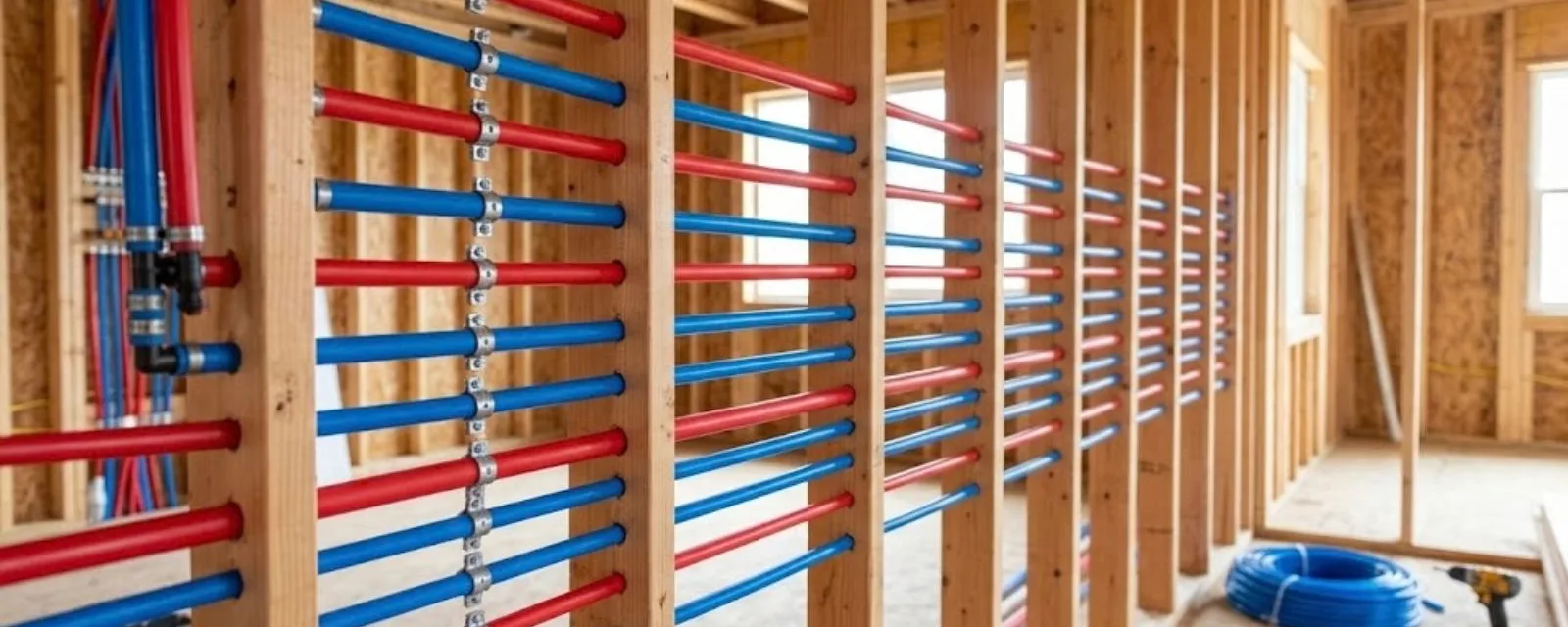
PEX is not a bad pipe. It is a flexible plastic supply pipe that plumbers have installed in homes for a long time, and it works well when it is installed correctly and kept away from the things that damage it. The bad reputation comes from a few real weak points, such as sunlight, certain fittings, and poor workmanship, plus a lot of internet noise.
Copper has its own weak points. Neither material wins in every house. The honest answer is that the pipe matters less than the installation, the water, and whether the system fits your home.
Why people ask whether PEX is bad
Most of the worry traces back to three things. Some people have seen photos of failed fittings, some have read warnings about PEX near sunlight, and some distrust anything that is not metal. These concerns are not all wrong, but they are narrower than the headlines suggest.
We are not going to quote failure statistics here, because we do not have trustworthy local numbers and invented ones would mislead you. Instead, here is how the two materials differ in ways you can verify with a plumber and a product label.
Where PEX is strong
PEX bends around corners, so a run often needs fewer fittings than copper. Fewer joints means fewer places for a leak to start. It is also quieter and it handles a small amount of freezing better than rigid pipe, because it can expand a bit without splitting at once.
Installation tends to be faster, which can reduce the disruption when walls must be opened. Because it does not corrode like metal, it does not pit from the inside the way some copper does in aggressive water.
Where PEX is weak
PEX is damaged by ultraviolet light. It should not be left exposed to sun, and an outdoor or garage run needs to be covered and protected. It can also be chewed by rodents, and it does not like contact with some solvents and petroleum products.
The fittings are the part most worth discussing. PEX relies on crimp, clamp or expansion connections, and these only work when the right tool and the right size are used for the right fitting. A poorly made connection may look fine for a while before it seeps.
| Question | PEX | Copper |
|---|---|---|
| How is it joined? | Crimp, clamp or expansion fittings | Soldered or brazed joints, or press fittings |
| Sunlight exposure | Needs protection from UV light | Not affected by UV |
| Freeze resistance | Tolerates some expansion, but not freeze-proof | Can split when water freezes |
| Corrosion from water | Does not corrode like metal | Can pit in aggressive water over time |
| Workmanship risk | Fitting and tool errors | Poor soldering and flux residue |
| Repair after a leak | Usually a cut and a fitting | Often a cut, a sleeve, or a new section |
Where copper is strong and weak
Copper has a long track record, handles heat well, and is not affected by sunlight or most rodents. It is rigid, so exposed runs stay neat and in place. When a copper system is built well and the water is gentle on it, it can serve a house for a very long time.
Copper has its own failure modes. It can develop pinhole leaks from the inside, and joints can fail if soldering was rushed. It is also stiffer to install, which can mean more fittings and more opened wall. Materials tend to cost more than PEX, though the right choice for a job is a call for the plumber, not a rule of thumb.
What to do if you suspect a failing pipe
Shut the water off at the main shutoff and open a faucet low in the house to relieve pressure. Photograph any wet spots, green crust on copper, or damp drywall. Do not seal a spraying pipe with tape and leave it. If a ceiling is bulging with water, call right away and keep clear of the area.
If the leak is small and slow, shut the water off anyway. A slow leak inside a wall can soak insulation and framing unseen.
Questions to ask before choosing a pipe
A good quote should tell you what is being installed and why. These questions help you compare bids without needing to be a pipefitter.
- Which brand and type of PEX or copper is being used, and is it rated for hot water?
- How will the pipe be protected from sunlight, nails and sharp edges?
- What fitting system is being used, and who makes the tool?
- Will the work be permitted and inspected, and who pulls the permit?
- How will walls, ceilings and the water heater connections be handled?
A plumber who answers these plainly is a better sign than one who only praises a material. Ask for the answers in writing.
Kuna water and what it means for your pipes
The City of Kuna's own water quality report says that all of southern Idaho has hard water because of naturally occurring calcium. Hard water is mostly an issue for water heaters, fixtures and aerators, and it does not disappear because you chose PEX or copper. If scale is part of your complaint, a softener question belongs next to the pipe question.
The same report lists lead and copper sampling on 9/16/2020, with 30 samples and no sites above action levels. That says something about the city's sampling, not about the plumbing in your house. Your own pipes, solder and fixtures are still worth checking if you have an older home.
Source: City of Kuna CCR
When a repipe makes sense
Repiping is a big job, so it should be based on evidence and not on fear. Repeated leaks in different spots, discolored water, low flow that comes back after fixtures are cleaned, and pipe that is flaking or crusted are reasons to start the conversation. A single leak in one section often needs only a repair.
If you are considering the whole house, read about repiping in Kuna and ask for the plan in writing. Plumbing for an existing residence is covered work on the City of Kuna plumbing permit application, so ask the Kuna Building Department at (208) 922-5546 whether your project needs one.
Hard water also affects the rest of the system. If scale is shortening the life of fixtures, a water softener installation may belong in the same conversation as the pipe.
Want a second opinion on your pipes?
Call (208) 679-8357 and describe what is leaking or discolored. The line is answered 24/7.
Nampa and nearby homes
We work in Kuna and the surrounding towns, and homes in the area span many ages and pipe types. If you are in Nampa, the Nampa plumbing page explains how we handle visits there. You can also see the full service area if you are unsure whether we reach your address.
Whether a pipe material is allowed in your house is set by the 2017 Idaho State Plumbing Code, which is based on the 2015 UPC, so ask your plumber to confirm what the code accepts.
Common questions about PEX
PEX made for potable water carries a rating mark on the tubing. Check the marking and ask your plumber which product is being installed. Do not use unrated tubing for drinking water lines.
PEX tolerates some expansion better than rigid pipe, but it is not freeze-proof. Keep pipes in unheated spaces insulated and protect them from a hard freeze like any other line.
Yes, with the correct transition fittings. The connection should be made with parts meant for the job, not improvised, and it should be accessible if possible.
No. Pipe material does not remove minerals from the water, so scale on fixtures and heaters will continue. A softener or other treatment is a separate decision.
We have no verified local data that favors one material across the city. The better choice depends on your home, how the pipe will be routed, and the quality of the installation. Ask for the reasoning in the quote.