
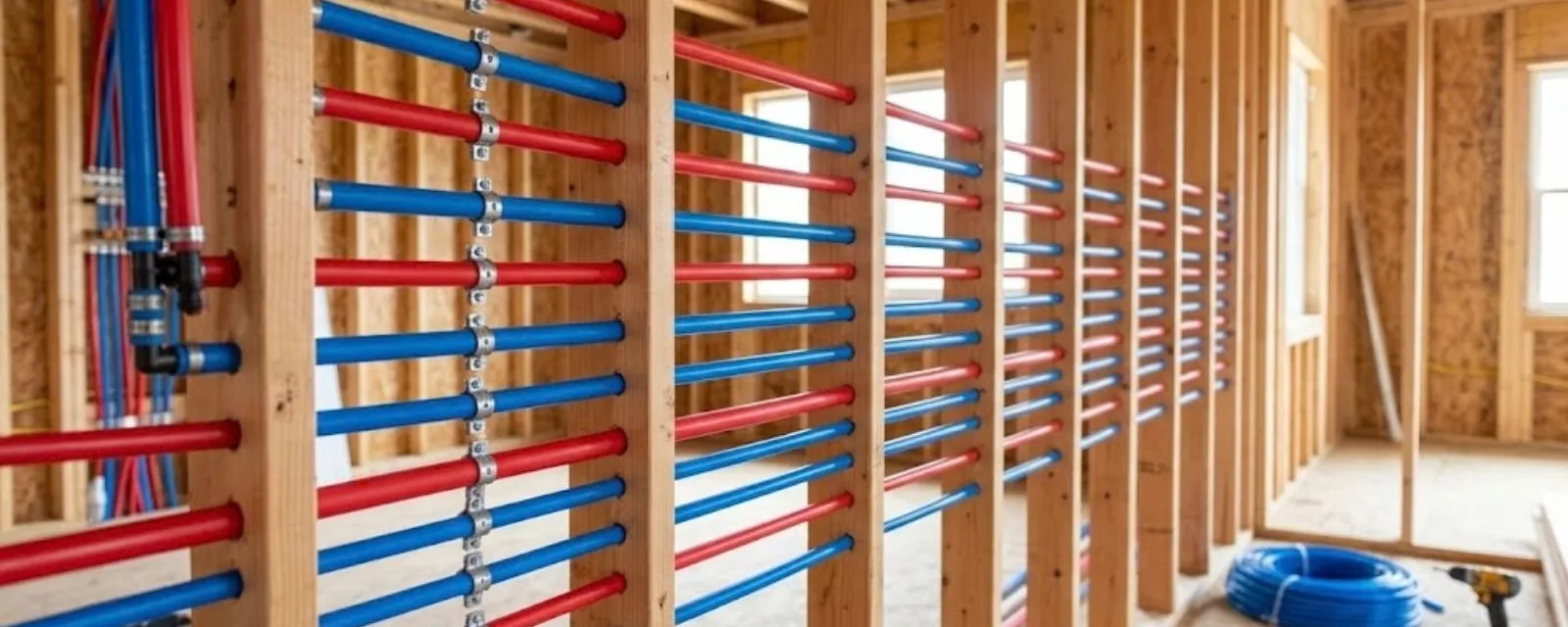
Repiping means replacing the water supply pipes in a house, the lines that carry hot and cold water to every fixture. It is a planned project, not a same-hour emergency, but Kuna Express Plumbing answers the line 24/7, so you can call about a failing pipe at any hour.
A plumber looks at the pipes you have, explains what is wearing out and quotes the price before work starts. Our burst pipe repair page covers the cases where a line has already failed and water is moving.
Signs your supply pipes are wearing out
Pipes rarely fail without warning. The usual clues build over months or years.
- Water that comes out brown, orange or cloudy, especially first thing in the morning.
- Pinhole leaks or green and white crust on copper pipe.
- Repeated repairs on the same lines, or a leak that returns a few feet from the last one.
- Weak flow at several fixtures, which can be a pipe narrowed by rust or mineral scale.
- Galvanized pipe, the gray steel type, that has rust blooms at joints.
- CPVC plastic that has cracked at a fitting or turned brittle.
A single clue does not mean the whole house needs new pipe. A plumber checks pressure, looks at the pipe in accessible spots and tells you whether the problem is local or widespread.
Discolored water and what it can mean
Rusty or cloudy water has more than one cause. Rust from galvanized pipes can tint water brown or orange. Mineral scale and sediment from the water heater can also make water look cloudy, and a recent shutoff or repair in the neighborhood can stir up sediment for a day or two.
Test it by running the cold tap for several minutes. If it clears, the source may be sediment in the line or a recent disturbance. If it stays discolored, the pipes inside the house, the water heater or the service line are the next suspects. Our water line repair page covers the buried line from the meter.
Pipe materials compared
No material is perfect, and the right choice depends on the house, the budget and what the plumber finds. The Idaho State Plumbing Code decides which materials can be used, and the plumber confirms what is allowed before quoting.
| Material | What it is | Points to know |
|---|---|---|
| Copper | Rigid metal pipe joined with soldered or pressed fittings | Long used in homes, can develop pinholes in some conditions |
| PEX | Flexible plastic tubing joined with crimp or expansion fittings | Fewer joints in a run, must be kept out of direct sunlight |
| CPVC | Rigid plastic pipe joined with solvent cement | Can crack at fittings, and some callers report brittleness with age |
| Galvanized steel | Steel pipe with a zinc coating, common in older homes | Rusts from the inside, can narrow and restrict flow |
The comparison is a starting point, not a recommendation. We explain what each option means for your walls, your floors and your schedule. The plumber also tells you why a particular material is being proposed for your house.
Repipe or keep repairing
Repair is the right call when one line has failed and the rest of the pipe is sound. Repiping starts to make sense when failures keep showing up in different places, when the water is discolored throughout the house or when the pipe is a material with a known history of failing.
- One leak in an otherwise healthy system: repair.
- Pinholes in several rooms: discuss repiping.
- Galvanized pipe with low flow at many fixtures: repiping is usually the stronger fix.
- A slab leak on a line that has failed before: compare a slab repair with rerouting the line overhead.
We lay the options out side by side, with the price of each. You decide which path fits your house and your budget.
Considering a repipe?
Call and describe the pipe type, the leaks and the water color so a plumber can plan a visit.
How a whole-house repipe is planned
Look at the pipes you have
A plumber walks the house, checks the material, the pressure and where the pipes run.
Choose the material and route
You and the plumber agree on the pipe type and the route through attic, crawlspace or walls.
Confirm the price and the schedule
The price is given before work starts, along with how long water will be off.
Do the work in stages
Water is shut off, old lines are replaced and new lines are pressure tested.
Restore and test
Fixtures are reconnected, pressure is checked and the plumber shows you the shutoffs.
How long it takes depends on the size of the house, how many fixtures there are and how much of the pipe is reachable. A small home with open access moves faster than a large one with finished walls. We tell you the expected schedule in the quote, not afterward.
Getting ready for repiping day
Clear the areas around the water heater, under sinks and in the attic or crawlspace entry. Plan where family members will bathe and cook while water is off. Move valuables from rooms where walls will be opened.
Walls, drywall and patching
Reaching the pipes can mean opening drywall at some points, running new lines through the attic or crawlspace, or both. Plumbers cut as little as the job needs. Drywall patching, texture and paint are usually finished by a drywall or paint trade, and we describe the locations so you can schedule them.
Kuna homes and repipe decisions
Kuna's population nearly tripled between 2000 and 2010, so a lot of local housing is recent. That means a repipe is often about an older house, a rural property or a specific pipe type, not age alone. If your home was built in the last few decades, pinholes or cracked fittings are more likely to be a local problem than a reason to replace everything.
The City of Kuna's water quality report says that all of southern Idaho has hard water because of naturally occurring calcium. Hard water leaves mineral scale in pipes and on water heater elements over time. If scale is a pattern in your house, ask about a water softener while the pipes are open, and see our water softener installation page.
The same report says lead and copper sampling on 9/16/2020 found 0 of 30 sites above action levels. That is system-level sampling, so it does not test the pipes inside your home. If you suspect old lead solder or pipe, ask a plumber to inspect it.
Permits and licensing
The City of Kuna plumbing permit application covers plumbing for existing residences, and the Building Department at (208) 922-5546 can tell you whether your repipe needs a permit. Work without a permit incurs double permit fees as the minimum charge. Idaho licenses plumbers through DOPL, and you can verify any plumber through the state's online license search.
What to do before the repipe crew arrives
Clear access to the water heater, main shutoff and any closets or cabinets where pipe runs. Move furniture away from walls the plumber may need to open. Plan where the household will wash and cook while the water is off. Do not cut into walls yourself to look at pipe.
What repiping costs
Repiping near Nampa
We take repiping calls beyond Kuna, and the Nampa emergency plumber page explains how dispatch handles addresses there. Older Treasure Valley houses are where the question comes up most often, and the visit starts with the same look at the pipes you have. A repipe is done to the 2017 Idaho State Plumbing Code, which is based on the 2015 UPC, and the pipe material you choose has to be one that code accepts for potable water.
Repiping questions from Kuna homeowners
The line is answered 24/7, so you can call at any hour. Repiping is planned work, so the visit is scheduled for a time that works for you, and same-day appointments are available when the schedule allows.
Consider it when leaks keep appearing in different places, when galvanized pipe restricts flow or when discolored water continues after the water heater is checked. A plumber can tell you whether the problem is local.
It depends on the size of the house, the number of fixtures and how much of the pipe is reachable. The plumber gives a schedule with the quote, along with how long the water will be off.
Not always, but water is off for part of the work and there is noise and dust. The plumber tells you what to expect for your home.
Some openings are usually needed. Plumbers keep them as small as the work allows, and drywall patching and painting are normally finished by another trade afterward.
Insurance often covers sudden damage from a burst pipe but not the replacement of worn pipe. Check your policy or ask your agent before the work begins.