
Rust-colored water comes from one of four places. It may be iron in the source water, rust inside old steel or galvanized pipe, a corroding water heater, or sediment stirred up by a change in the supply. The quickest sorting test is to run a cold tap and a hot tap separately and compare them in a clean white container.
If only the hot water is discolored, suspect the water heater. If both are discolored and you are on city water, call the City of Kuna Water Department before spending money. If you have a private well, a lab test comes first, and then the filter choice.
Sort the cause with a simple test
You do not need tools to narrow this down. Fill a clear glass or a white bucket from the cold tap, then the hot tap, and look at both in daylight.
| What you see | Likely cause | First step |
|---|---|---|
| Orange water from the hot tap only | Rust or sediment from the water heater tank | Have the heater inspected |
| Brown or orange from the cold tap, all taps | Iron in the source, or rust in the supply pipe | City water: call the Water Department. Well: test the water |
| Discolor only after the water sat unused | Rust in older steel or galvanized pipe | Run the tap for a minute, then ask about a pipe check |
| Water clears quickly, then returns | Sediment disturbed by a change in supply | Note the date and ask your provider |
| Reddish stains on fixtures and laundry | Iron staining over time | Test the water and consider treatment |
Take a photo of the glass with a timestamp. A plumber, a lab or the city can learn a lot from how the color looks and how quickly it settles.
City water or a private well
The City of Kuna Water Department runs several wells, and its December 2021 Consumer Confidence Report lists nine of them, drawing groundwater. If your home is on city service, rusty water is something to report to the department. Staff can tell you whether work on the system may have stirred up sediment.
If your home is not on city service and you have your own well, the water quality is your responsibility. That is where testing matters most, and where a filtration plan starts.
Iron in a private well
Iron is common in groundwater. It can be dissolved and clear when it comes out of the tap, then turn orange after it meets air, or it can already be particles that settle in a glass. The form of the iron decides which treatment works, which is why the test comes first.
Water with iron can stain sinks, toilets, laundry and fixtures. Whether it also affects taste or the appliances that use water depends on the amount. A lab can report the level, and we do not guess it for you.
Testing a private well near Kuna
Central District Health says private well owners should test their water once a year for bacteria and nitrates. It also says harmful levels often cannot be detected by taste, sight or smell, so a clear glass is not proof that the water is safe.
That matters for iron too. Rust color tells you about iron, not about bacteria or nitrates, so ask the lab to run the annual tests and add iron to the list. Central District Health does not provide test kits, but it points to labs such as Analytical Laboratories or the Idaho Department of Laboratories. Its general line is (208) 375-5211.
Source: Central District Health
What the filters can honestly do
No filter fixes every kind of iron. The right choice depends on the form and the amount, along with hardness, pH and household use. Here is how the common options compare.
| Option | Works best for | Honest limit |
|---|---|---|
| Sediment filter | Particles of rust that are already solid | Does not remove dissolved iron |
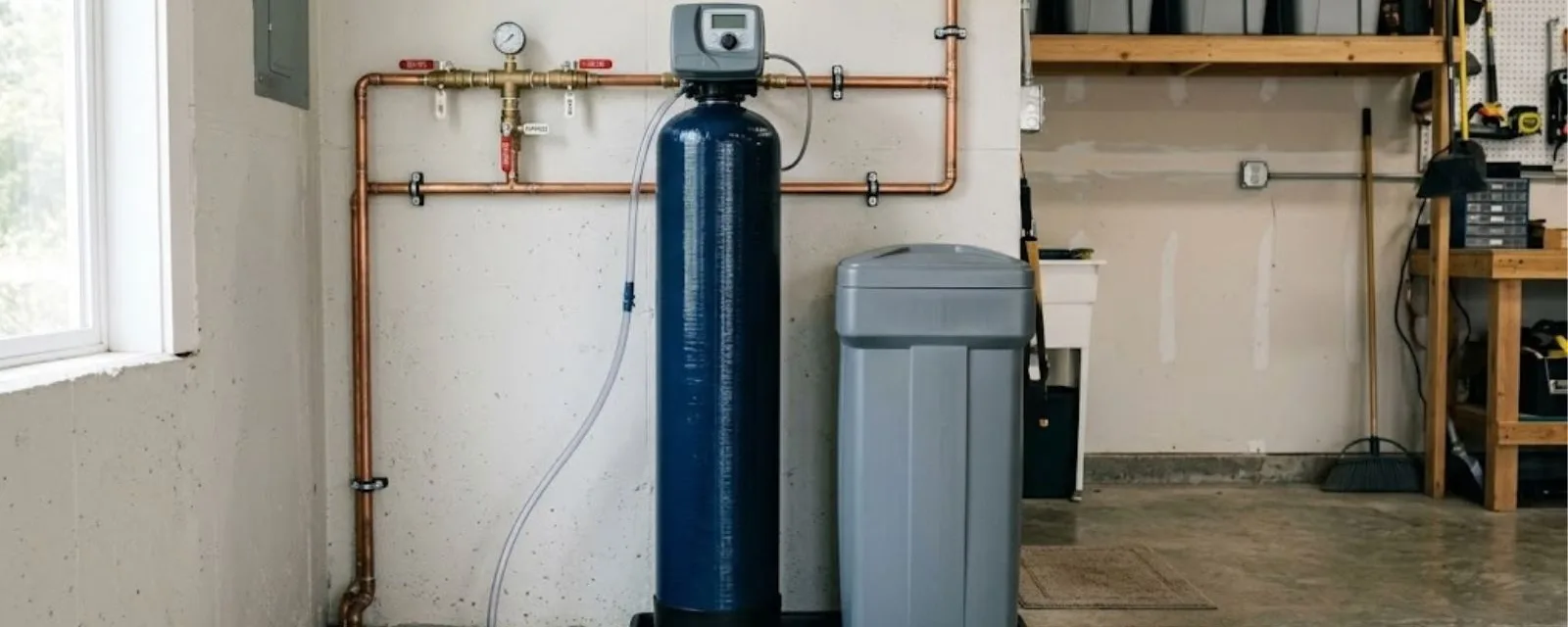
| Water softener | Small amounts of dissolved iron along with hardness | Can foul with heavier iron and may need a different setup |
| Oxidizing iron filter | Dissolved iron that is converted to particles and filtered out | Needs sizing, backwashing and upkeep |
| Chemical feed and filter | Higher iron or iron with other problems | More equipment to maintain |
| Point-of-use filter | Drinking or cooking water at one tap | Does not protect the whole house |
A plumber should size the equipment from your lab report. If a salesperson quotes a system without asking for one, ask why.
Rusty pipes are a different problem
If the water is clean at the source and rusty at the tap, the pipes may be the issue. Old galvanized steel corrodes from the inside and sheds rust, and short bursts of color after the water has sat can be a sign. In that case a filter is a bandage and the long-term answer may be new pipe.
Our page on repiping explains when replacement makes sense. A plumber can look at the pipe where it enters the house and at a cut section if one is available.
When the water heater is the culprit
Orange water from the hot side only points toward the tank. Sediment and rust can build up over time, and a leaking tank is a bigger concern than color. Check the base of the heater for moisture, and call if you find any.
Do not drain or flush a water heater unless you know how to do it safely, because the water is hot and the valves can fail. If you smell gas near the heater, leave the house and call 911 and Intermountain Gas from outside.
What to do while you decide
Do not drink or cook with water that is cloudy, smells odd or has been flagged by a test. Use bottled water until you know more. Run the cold tap until the color clears before filling a kettle or a pet bowl. Avoid washing white laundry in discolored water because the stains can set.
If a lab report shows bacteria or nitrates above safe levels, follow the lab's advice. Call Central District Health for guidance on next steps.
Choosing a softener or iron filter
Hard water and iron often travel together, so a plan can cover both. Southern Idaho water is generally hard, per the City of Kuna report, and a softener addresses that scale. For the iron part, the lab results tell the plumber whether a softener alone will do or a separate filter is needed.
If you want equipment installed, our water softener installation page covers what a visit includes. A plumber can also advise if permits apply, and the City of Kuna plumbing permit application lists water conditioning equipment among covered work. The Kuna Building Department can be reached at (208) 922-5546.
Orange water and not sure why?
Call (208) 679-8357 and tell us which taps show it. The line is answered 24/7.
Nampa and nearby wells
We serve Kuna and nearby towns, and well water varies from one property to the next. If you are on the Nampa side, the Nampa plumbing page shows how we handle work there. The service area page lists everywhere we go. According to Central District Health, private well owners should test once a year, and any treatment equipment you add is installed to the 2017 Idaho State Plumbing Code, based on the 2015 UPC.
Questions about iron and rust in water
The color alone does not tell you. Iron is mostly a nuisance, but the same water could carry other problems you cannot see. Use bottled water until you know the cause, and test a private well.
A softener can handle small amounts of dissolved iron, but heavier iron can foul the resin. A lab report and a plumber's sizing tell you whether you need a dedicated iron filter.
That points to the water heater tank, where rust and sediment can build up. Have it inspected, and check the base for leaks.
A pitcher filter may help the taste at one tap, but it is not built to treat a whole house for iron. For staining and heavy iron, get a lab result and talk to a plumber about whole-house options.
Call the City of Kuna Water Department at (208) 287-1728 and report it. If water is running uncontrolled, the water emergency line is (208) 573-7676. A plumber can check your side of the meter.