
Baking soda and vinegar can freshen a drain and loosen a thin film of grease, but they will not clear a real clog. The fizzing is a chemical reaction that mostly ends up as foam and salty water. It does not break up hair, a wad of paper, a mass of grease or roots in the line.
Use it as light maintenance on a slow kitchen or bathroom sink. If water is standing in the basin or backing up in other fixtures, skip the fizz and move to a plunger or a call.
What the fizz actually does
When baking soda meets vinegar, they react and make carbon dioxide bubbles. The foam can lift a bit of loose grime from the walls of the pipe and help with mild smells. It is gentle, which is both the good news and the limit.
A solid blockage needs to be pulled out or broken up, and a pile of bubbles does not do that. If the drain is already slow because debris is packed in the trap, the mixture may just sit on top of it.
How to use it for light maintenance
This is the version that is safe and sensible when a sink is a little slow but still draining.
Clear standing water
If the sink holds water, bail it out first, because the mix needs to reach the pipe.
Pour in baking soda
Add about half a cup down the drain and push it in with a spoon if needed.
Add vinegar
Pour in about a cup of white vinegar and let it foam. Cover the drain with a stopper if it bubbles up.
Wait a short while
Give it around fifteen minutes to work on loose film.
Flush with hot water
Run very hot tap water, not boiling, to rinse the loosened material through.
Do not use boiling water on PVC pipe or on a porcelain sink, because heat can soften joints or crack the basin. Hot tap water is enough.
What works better for a slow drain
If the fizz did nothing, it is time for something more direct. These options go after the blockage itself.
- Use a cup plunger on a sink or tub, with the overflow opening blocked by a wet cloth.
- Pull out the hair from a tub or shower drain with a plastic drain tool or a gloved hand.
- Place a bucket under the sink and unscrew the trap, clean it out, and put it back with the washers seated.
- Run a small hand auger only if you are comfortable using it, and stop if it meets hard resistance.
None of these needs chemicals. The trap often holds the clog that has been blamed on the whole line.
What does not work
Some habits make things worse. Pouring commercial drain cleaner on top of the vinegar mix is dangerous, and mixing different cleaners can release harmful fumes. Leaving cleaner in a blocked pipe also leaves a hazard for whoever opens it next.
Another problem is expecting one treatment to fix a repeat clog. A drain that slows again within days likely has a bigger issue, such as grease built up on the pipe wall, a pipe with a sag, or roots.
| Situation | Fizz and hot water | Better move |
|---|---|---|
| Slow sink, still draining, mild odor | Reasonable try | Repeat monthly if you like |
| Hair clog in a tub or shower | Rarely helps | Pull the hair out |
| Kitchen sink with grease buildup | May loosen a thin film | Clean the trap, then think about jetting |
| Toilet that will not flush | Not appropriate | Plunger, then call |
| Several fixtures slow at once | Will not reach the cause | Stop and call |
| Gurgling and sewage smell | Will not reach the cause | Stop and call |
When to stop and call
You do not need to keep trying. Calling after a reasonable attempt saves a flooded floor.
- Water backs up in a second fixture, such as the tub gurgling when the sink drains.
- Sewage or a strong sewer smell comes up from a floor drain or toilet.
- The clog returns within days of clearing.
- A toilet is overflowing or will not flush at all.
- You have already used chemical cleaner and the drain is still full.
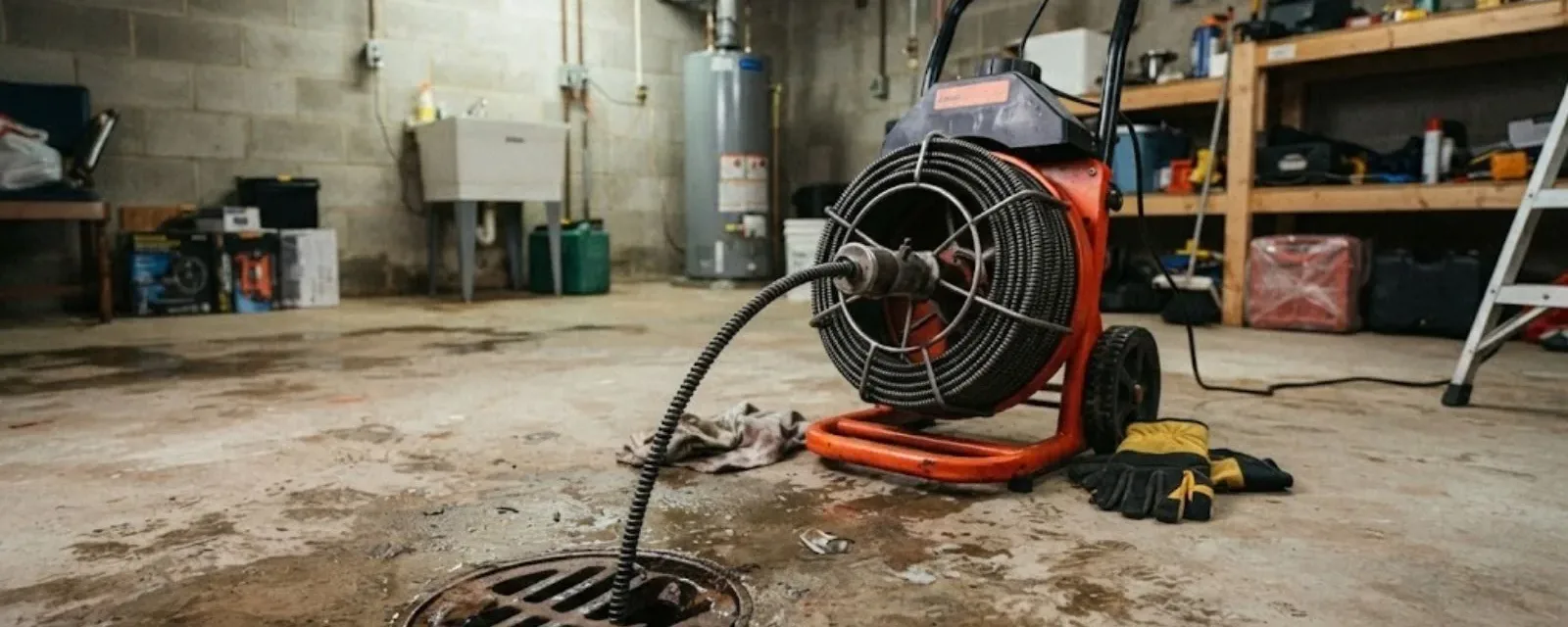
If the problem is one fixture, drain cleaning from a plumber uses cable machines and can be paired with a camera look. If the whole house seems affected, the issue may be the main sewer line, and a sewer line inspection shows what is inside the pipe.
Safe steps if the drain is backing up
Safe steps for a backup
Stop using water in the house, including the washer and dishwasher, because it adds to the overflow. Do not mix cleaners or add chemical drain cleaner to standing water. If water is near outlets or appliances, keep clear and shut off power at the panel only if you can reach it dry. Keep children and pets out of any sewage.
Wear gloves and wash your hands well after any contact with drain water. Disinfect surfaces that sewage touched.
Whose pipe is it, yours or the city's
Whose pipe is it in Kuna
The City of Kuna lists a sewer emergency line at (208) 573-1511. If your neighbors on the street are also backing up, or the problem began outside your property, the city's sewer main may be involved, and the city is who to tell.
If only your house is affected, the blockage is most likely on your side of the line, and a plumber is the faster call. A quick check of what the other houses on your block are experiencing can save you an unneeded service call.
Source: City of Kuna Water Irrigation page
Why hard water matters for kitchen and bath drains
The City of Kuna's water quality report states that all of southern Idaho has hard water because of naturally occurring calcium. Hard water tends to react with soap and leave a film, which can add to the sticky layer inside bathroom drains. That is one reason a bath or shower drain can slow down even without much hair.
It is not a reason to pour in more chemicals. Regular hair catching and a monthly flush of hot water do more good than a stronger cleaner.
Drain still backing up?
Call (208) 679-8357 and tell us which fixtures are affected. The line is answered 24/7.
Nampa and neighboring towns
We serve Kuna and nearby towns, and clogs look much the same from one house to the next. If you live in Nampa, see the Nampa plumbing page for how we work there. The service area page lists where we go. Drain traps and venting are laid out under the 2017 Idaho State Plumbing Code, based on the 2015 UPC, so a drain that keeps clogging may be a layout problem and not a cleaning problem.
Drain cleaning questions
In small amounts it is generally gentle on common household pipes. Do not mix it with commercial cleaners, and use hot tap water, not boiling.
Once a month is plenty for light maintenance. If a drain needs it more often than that, there is likely a clog or buildup that needs a different fix.
No. A toilet needs a plunger, and a toilet that will not flush or is overflowing needs a plumber if the plunger fails.
Not if the cleaner is still in the pipe. Mixing products can release fumes, so rinse thoroughly with water and call a plumber if the drain stays blocked.
Yes. New pipe still catches hair, grease, wipes and paper, and a fresh landscape can send roots toward a joint. Repeat clogs in a newer house are worth a camera look.