
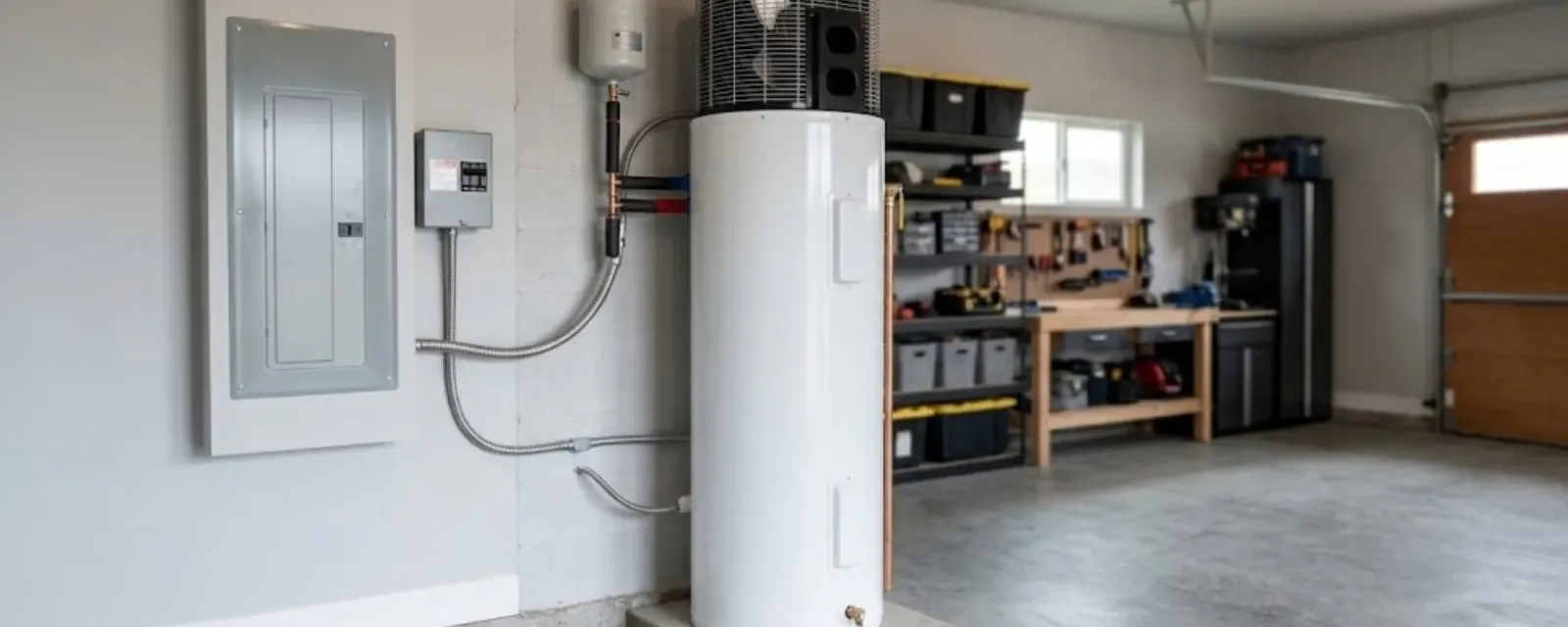
A water heater expansion tank is a small pressurized tank that sits on the cold supply line near the heater and absorbs the extra volume water takes up when it heats. Without somewhere to go, that extra water raises the pressure in every pipe in the house. Your home needs one when it is a closed system, and the installer decides that after looking at your setup.
A failed expansion tank shows up as a dripping relief valve, banging pipes, faucets that drip after a shower, or a tank that feels full of water when you tap it. This guide explains what the tank does, how to check yours safely, when one is needed and what installation involves.
What an expansion tank actually does
Water expands as it heats. A typical tank heater can push a surprising amount of extra water into the plumbing every time it runs a heating cycle. In an older open system that extra water flowed backward out into the street main, and nobody noticed.
Many homes now have a check valve, a pressure reducing valve or a backflow device on the main line. These stop water from flowing backward, which protects the public supply but also traps the expanded water inside your house. That is the closed system, and the pressure has to be absorbed somewhere.
The expansion tank does it. Inside is a rubber bladder or diaphragm with air on one side and water on the other. As pressure rises, the bladder flexes and takes in the extra water, then gives it back as the water cools.
Signs your expansion tank has failed
A bad tank rarely announces itself. The symptoms look like other plumbing problems, so it helps to know the pattern.
- The temperature and pressure relief valve on the heater drips or weeps, especially after the heater has been running.
- Pipes bang or thump when the heater fires or when a faucet is shut off.
- A faucet or toilet fill valve starts dripping that did not drip before.
- Water pressure at the fixtures feels harsh, then settles.
- The tank body is heavy and cold all the way up when you tap it, which suggests it is waterlogged.
- Rust stains or a wet spot appear at the tank's connection or around its base.
One of these alone is not proof. A dripping relief valve can also mean the valve itself has worn out, and banging pipes can have other causes. A plumber looks at the whole pattern before blaming the tank.
A safe check you can do yourself
You can learn a lot about a tank in a few minutes without opening anything. Do this only if the tank is within easy reach and nothing is actively leaking.
- Tap the tank with your knuckles. A healthy tank sounds hollow near the top and solid near the bottom, and a waterlogged one sounds solid all over.
- Look for rust, moisture or drips at the connection and along the body.
- Find the small air valve on top, which looks like a tire valve. Remove the cap and press the stem briefly with a small tool, keeping your face away.
- If only air hisses out, the air side is intact. If water squirts out, the bladder has failed and the tank needs replacing.
- Replace the cap and note what you found for the plumber.
Do not unscrew the tank from the line, and do not add air if water came out of the valve. A tank under pressure and hot water together are a burn risk, so leave anything beyond a tap test to a licensed plumber.
| What you notice | What it may point to | What happens next |
|---|---|---|
| Relief valve drips after heating | Thermal expansion with no tank, or a failed tank | Plumber checks tank and valve |
| Banging pipes | Pressure swing or loose pipe straps | Plumber checks pressure and supports |
| Water from the air valve | Ruptured bladder | Tank is replaced |
| Tank feels full and heavy | Waterlogged tank | Plumber tests, then replaces |
| Dripping faucets after showers | Pressure spikes | Plumber measures house pressure |
When a home needs an expansion tank
The short rule is that a closed system needs a way to absorb expanded water. Common closed-system clues are a check valve or pressure reducing valve near where the water line enters the house, or a backflow device on the main. If you cannot find one, that does not prove your system is open, because some are hidden in a meter box or behind a wall.
A tank is also worth discussing when you replace a heater, since the old one may have been working with an aging tank that nobody remembers. Newer heaters are often installed in tighter, more sealed plumbing than the tank they replace.
Idaho plumbing work follows the 2017 Idaho State Plumbing Code, which is based on the 2015 Uniform Plumbing Code. Your installer works from that code and from the heater maker's instructions when deciding whether a tank is required. That decision belongs to the installer and any inspector, not to a general rule you read online.
Who decides, and why it should not be a guess
Sizing matters. A tank that is too small for the heater's volume fills up and stops doing its job, and a tank with the wrong air charge acts the same. The air charge is set to match your house pressure, which means someone has to measure that pressure first.
That is why a plumber checks the supply pressure, the type of valve on the main, the size of the heater and the existing tank before choosing anything. If you are shopping on your own, a box store tank with the right thread may still be the wrong size.
You can read more about the heater side of the job on our water heater installation page, where the install sequence and permit questions are covered. It is a good starting point if the tank is part of a bigger heater job.
What installation involves
A plumber handles the work in a set order so the heater and the house stay safe. Here is the usual sequence.
- Turn off the electric breaker or set the gas control to off, then close the cold supply to the heater.
- Open a hot tap to relieve pressure, and drain enough water to work on the cold line.
- Fit a tee on the cold supply near the heater and mount the tank so its weight is supported, not hanging from the fitting alone.
- Set the tank's air charge to match the measured house pressure.
- Open the supply, bleed air from the lines and check every joint for drips.
- Restore power or gas and watch the first heating cycle for relief valve weeping.
A tank hung straight from a copper line can sag and strain the joint over the months. A strap or bracket is cheap insurance, and the plumber decides which fits your space.
What to do if the relief valve is dripping
Turn off the heater power or gas control, close the cold supply, and keep people clear of the discharge pipe, because the water can be very hot. Do not cap or plug the valve. Call a plumber to check the pressure and the tank.
Stop and call if you see this
Steady dripping from the relief valve, hot water on the floor, a rotten-egg or gas smell, or a tank that is bulging or rusting through are reasons to stop. Turn off the electric breaker or the gas control, close the cold supply to the heater and keep people away from any discharge pipe. If you smell gas, leave the house and call Intermountain Gas or 911 from outside.
Replacement or repair of the tank alone
A failed bladder cannot be repaired, so the tank is replaced. The job is usually quicker than a full heater swap, but it still involves draining and reconnecting the line. If the heater itself is old, a plumber may suggest replacing it at the same time, and our water heater replacement page explains how that decision gets made.
Do not add an expansion tank just because a neighbor did. A closed system with a good tank is fine. An open system with an unneeded tank costs money and gains nothing.
What a Kuna permit means for this job
The City of Kuna Plumbing Permit application, dated January 2025, lists water heater replacement among the work it covers. It also says work done without a permit pays double permit fees as the minimum charge. If you are swapping a heater and adding an expansion tank, ask before the new unit arrives, because the permit question is cheaper to settle first.
The same application says work must start or resume within 180 days or the permit becomes invalid. Book the plumber soon after the permit is issued so it does not lapse while you wait on a delivery.
The Kuna Building Department at (208) 922-5546 can tell you whether your specific job needs a permit. It is open Monday to Friday, 8 am to 5 pm, at Kuna City Hall, 751 W 4th Street.
Source: City of Kuna
Heater dripping or pipes banging?
Call (208) 679-8357 and describe what you hear and see. A plumber can tell you what to shut off and what to look at first.
Planning the job around Kuna and Nampa
If your heater is in a garage, the tank and its support need room that a cramped corner may not give. Mention the heater's location when you call so the plumber arrives with the right fittings. Homes in Nampa and other nearby towns often follow the same process, and we cover the wider service area for planned work and after-hours leaks.
Whether a system needs an expansion tank is decided by the installer under the 2017 Idaho State Plumbing Code, based on the 2015 UPC, and the manufacturer's instructions.
Frequently asked questions
No. Only closed systems need a way to absorb expanded water. Whether yours is closed depends on valves on the main, and a plumber decides after looking at the setup.
It can add stress. Repeated pressure spikes strain the relief valve, the tank seams, the fixtures and the supply connections. Catching a failed tank early is cheaper than repairing water damage.
Press the air valve stem briefly. If only air comes out, the bladder may be fine and the charge needs adjusting. If water comes out, the bladder has failed and the tank is replaced.
The work involves draining, fittings and a pressure setting, and a mistake can leak or scald. Idaho allows homeowners to pull a permit for their own residence, but a plumber is the safer choice when you are unsure about the pressure and sizing.
Ask about the heater job as a whole. The City of Kuna permit application lists water heater replacement as covered work, and the department can say whether your project needs a permit.
If the drip comes from expanded water in a closed system, yes it often does. If the relief valve itself has worn out, it needs replacing, so the plumber checks both.