
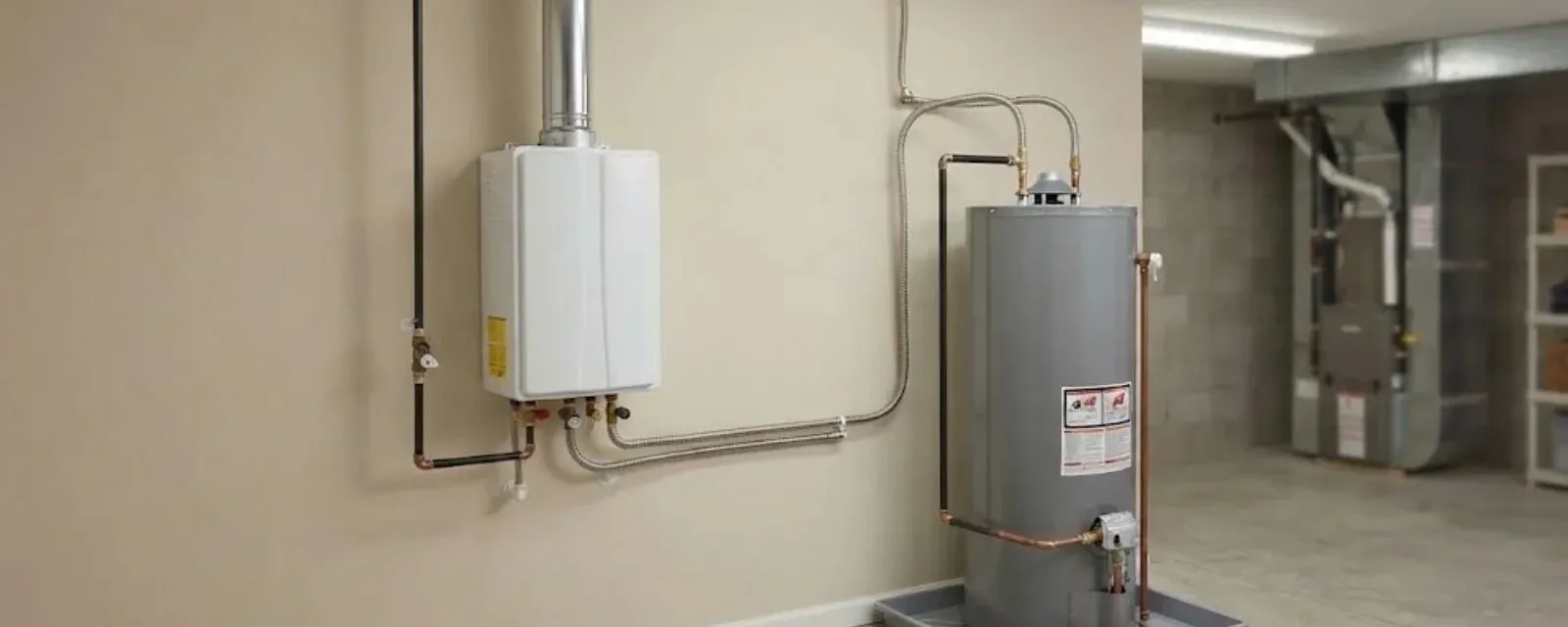
Tankless water heater installation cost in Kuna depends far more on your house than on the unit itself. The five things that move the price most are the gas line, the venting, the electrical supply, the permit and the condition of your water. A swap that reuses a gas line and an existing vent is a very different job from one that needs all of them rebuilt.
No honest price can be given without seeing the setup, so this page does not give dollar figures. It explains what each factor means so you can see why two quotes can differ, and what questions to ask before agreeing to either.
Why tankless quotes vary so much
A tank heater is a fairly standard swap. A tankless heater is a different machine that heats water on demand with a powerful burner or large electric elements. That power has to come from somewhere, and it has to leave the house safely.
So the quote is really several smaller jobs added together. The unit, the fuel supply, the exhaust, the water connections, the permit and the cleanup each carry their own work.
A quote that lists only the unit and a flat labor line may leave out items that appear later as extras. A clear price before work starts should name each of these things, or say plainly that they were checked and are not needed.
The gas line
Gas tankless heaters use much more gas at peak than a tank heater, because they heat a full flow of water instantly. The existing gas pipe that fed your old tank may be too small to deliver that much.
An installer checks the pipe size, the length of the run and the other appliances sharing the line. If the pipe is too small, part of it is replaced with larger pipe, and that adds labor and material.
The gas meter and regulator matter too. If the utility's equipment cannot supply the extra demand, that is a question for the gas company, and it is better answered before the heater is ordered. Never work on a gas pipe yourself, and if you smell gas, leave and call Intermountain Gas or 911 from outside.
Venting
Tankless heaters need venting built for them, and the vent is often a larger share of the job than people expect. Condensing models use plastic vent pipe and need a drain for the acidic condensate. Non-condensing models run hotter and need vent materials rated for that heat.
The route matters. A heater on an exterior garage wall may vent straight out in a few feet. One in a basement or interior closet may need a long run through floors or the attic, with extra fittings and sealing.
Combustion air is part of the same question. A heater in a tight closet may need an opening or a sealed intake pipe, and the installer decides this from the manufacturer's instructions.
| Cost driver | What the installer checks | Why it changes the job |
|---|---|---|
| Gas line | Pipe size, run length, meter capacity | Larger pipe means more labor and material |
| Venting | Vent type, route, wall or roof exit | Long or complex runs add parts and time |
| Electrical | Panel capacity, breaker space, wire size | Electric units need heavy circuits |
| Permit | Whether the work needs one | Adds an application and inspection step |
| Water quality | Hardness, scale history, filtration | Scale shortens life without treatment |
| Location | Access, clearances, existing plumbing | Moves can mean new pipe and venting |
Electrical needs
Electric tankless units draw a lot of power at once. Some need several large breakers, heavy wire and a panel with room to spare. An older panel may not have the capacity, and adding it is an electrician's job.
Gas models need power too, but far less. They still need an outlet or a dedicated circuit for the controls, fan and igniter, and a condensing model may need power for a condensate pump.
Electrical work often needs an electrician and a separate permit from the plumbing. Ask who is handling it so it does not surface as a surprise after the heater arrives.
Permit and inspection
Many water heater jobs involve a city permit, and tankless installations can involve gas, vent and electrical inspection steps as well. The City of Kuna Building Department at (208) 922-5546 can tell you what your project needs.
The cost of a permit is only part of the picture. Work done without one can bring double permit fees as a minimum charge. Asking first is cheaper than fixing it afterward.
Idaho plumbers are licensed through the state Division of Occupational and Professional Licenses, and you can search for a license on the DOPL website before you hire anyone. It takes a minute and is worth doing.
Water quality and long-term cost
Tankless heaters have narrow passages that scale can clog. In hard water areas, a heater that is never flushed can lose efficiency, throw error codes or fail early. This affects the long-term cost as much as the install price.
Many owners add isolation valves so the unit can be flushed easily, and some add a softener or scale filter. Our water softener installation page explains how softeners are set up and what they change.
Utilities and water in Kuna
Power in Kuna comes from Idaho Power and gas from Intermountain Gas, according to the City of Kuna utilities page. That matters for the tankless decision because your fuel choice sets who you talk to. A gas unit raises a question for the gas utility about meter capacity, and an electric unit raises one about your panel and service.
The City of Kuna 2021 Consumer Confidence Report states that all of southern Idaho has hard water because of naturally occurring calcium. It publishes no numeric hardness figure, so none is quoted here. The practical point is that a tankless heater in Kuna should be planned with scale in mind, with flushing access and possibly a treatment step.
Ask the installer how the heater will be flushed and how often. Also ask what it takes to keep scale under control over the years.
Source: City of Kuna utilities page, City of Kuna CCR
Comparing quotes fairly
When you have two or more quotes, line them up against the same list. Ask each installer what is included for gas pipe, vent materials, condensate drain, electrical work, permit, flush valves, old heater removal and wall patching.
Check that each quote is for the same size of unit. A smaller unit may be cheaper but fail to keep up when two showers run at once. The installer should ask how many fixtures run at the same time in your home and what the incoming water temperature is in winter.
A quote that is far lower than the rest deserves a question about what was left out. A quote that is far higher may include work the others skipped, or may simply reflect a harder install.
Safe steps before you get a quote
Find your current heater and note its fuel, its location and its age. Look at where the vent leaves the house and where the gas pipe and electrical panel are. Write down any hot water complaints, such as lukewarm showers or slow hot water at a far bathroom. If you ever smell gas, leave the house, then call Intermountain Gas or 911 from outside.
Planning a tankless install?
Call (208) 679-8357 and describe your current heater, the fuel and where it sits. A plumber can tell you what the job is likely to involve.
Is tankless worth it for your home?
A tankless heater can supply hot water as long as it runs and can free up floor space. It is not automatically cheaper to own, because of the install cost and upkeep. The answer depends on household size, hot water habits and whether the house can accept the gas, vent or electrical needs.
For a full picture of how we handle the equipment itself, see our tankless water heater page. We also take planned work from Nampa and anywhere inside our service area.
Frequently asked questions
A tankless unit needs a bigger fuel supply, special venting and sometimes upgraded electrical service. A tank swap often reuses the existing connections.
Often yes, but the installer must check clearances, venting, gas supply and electrical capacity first. Some locations need changes.
Scale builds up inside narrow passages and can reduce performance and shorten life. Regular flushing and, in some homes, a softener or filter help.
The City of Kuna permit application lists water heater replacement as covered work. Call the Building Department at (208) 922-5546 to confirm what your project needs.
If the new unit uses more gas than the old one, ask the gas utility whether your meter and line can handle it. The installer can help you work out what to ask.
A plumber can explain what drives the cost and what questions apply to your house. A firm price needs details about the gas, vent, electrical and location.