
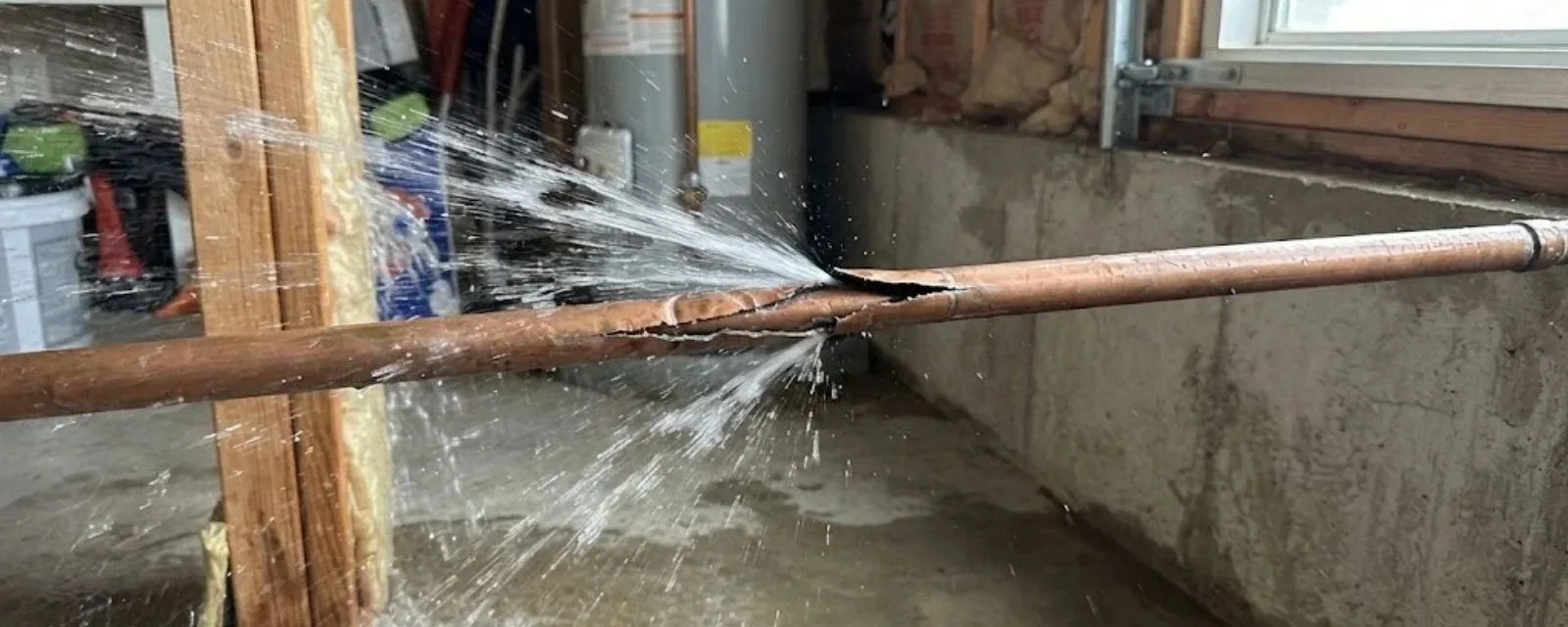
If a pipe is frozen, you will usually notice that a faucet gives only a trickle or nothing at all. Open that faucet, find your main water shutoff, and warm the pipe slowly with a hair dryer or warm towels, working from the faucet back toward the frozen spot. Never use an open flame, a torch or a propane heater, because they can start a fire or damage the pipe.
If you see a crack, a bulge or water spraying, close the main shutoff and call a plumber. A frozen pipe that has split starts leaking as soon as it thaws, so be ready to stop the water.
Know your main shutoff before you need it
The single most useful thing you can do is find the main shutoff valve today. In many homes it sits where the water line enters the building, often near the water heater, a utility room, a crawlspace or a garage wall. Layouts vary, so walk the house and look.
Turn it once to confirm that it moves and shuts the flow off at a faucet. A valve that is stuck or leaking is better found on a calm day than at midnight. If it will not close, a plumber can replace it.
Tell everyone in the house where it is. It also helps to tag it with a bright label so a guest or a tenant can find it.
Prevention before the first freeze
The best protection is a short checklist done before cold weather arrives. None of these steps needs special skill, and most take minutes.
Disconnect hoses
Remove garden hoses from outdoor spigots and drain them, because a hose left on can hold water against the faucet.
Shut off and drain irrigation
Close the supply to the sprinkler system and drain what you can. Have the backflow assembly checked if you are unsure.
Insulate exposed pipes
Wrap pipes in garages, crawlspaces and outside walls with insulation sleeves meant for pipe.
Seal air leaks
Close gaps around where pipes enter the house, vents to crawlspaces, and drafty garage doors.
Open cabinet doors on cold nights
Let warm room air reach pipes on exterior walls under sinks.
Let a faucet drip during a hard freeze
A slow drip keeps water moving, which helps on the coldest nights.
If you use heat tape or cable on a pipe, follow the product instructions exactly and never overlap it unless the instructions allow it. Replace damaged cable before winter.
When to be ready in Kuna
Timing your winter prep in Kuna
Boise's average first freeze falls in mid-October, according to National Weather Service data cited by KBOI. That is an average, not a forecast, and it can come earlier or later in any given year.
For a Kuna homeowner the practical lesson is to finish the checklist before mid-October, not after the first cold snap. Hoses off, irrigation drained and cabinet doors ready to open are small jobs that cost little when done early and a lot when ignored.
Source: National Weather Service data cited by KBOI, Oct 6, 2025 report
Signs a pipe is frozen
A frozen pipe often gives a few quiet warnings. Knowing them helps you act before a split.
- Water slows to a trickle at one faucet, or stops entirely.
- Frost forms on a visible pipe, or the pipe feels very cold.
- A strange smell comes from a drain, which can mean a frozen or blocked line.
- A bulging or damp spot appears on a pipe, wall or ceiling.
- Only the cold or only the hot side stops, which narrows the location.
If more than one faucet is dry, the freeze may be near the main or in a wall you cannot reach. That is a good reason to call and not to guess.
| Place in the house | Why it freezes first | What to do |
|---|---|---|
| Pipes in an exterior wall | Little insulation between the pipe and the cold | Open the cabinet doors on cold nights |
| Garage and attic supply lines | Unheated space | Insulate and keep garage doors closed |
| Outdoor faucets and hose bibs | Directly exposed | Disconnect hoses and shut off the supply if there is a separate valve |
| Crawlspace pipes | Cold air moves through vents | Seal gaps and insulate exposed lines |
How to thaw a frozen pipe safely
Thaw slowly. Quick, concentrated heat can crack a pipe or scald you with steam as ice turns to water.
- Open the faucet served by the frozen pipe so water and steam have a place to go.
- Warm the pipe with a hair dryer on a low setting, wrapped towels soaked in warm water, or a heating pad.
- Start at the faucet end and work back toward the frozen section.
- Keep going until full flow returns, then check the whole run for leaks.
Never do this
Do not use a torch, a lighter, a propane or kerosene heater, a space heater near wet material, or boiling water poured on pipe. Do not thaw a pipe near a gas appliance or with water on the floor near electrical outlets. If you smell gas, leave the house and call 911 and Intermountain Gas from outside.
If you cannot reach the frozen section, or you see water leaking, stop and call. A plumber can thaw and repair a line with the right tools.
What if the pipe already burst
A pipe that froze and split will not show the damage until the ice melts. Shut the main off first, then open a faucet to drain what is left. Turn off the water heater if the tank cannot refill, and move belongings out of the wet area.
Photograph the damage before cleanup for your records. Insurance often covers sudden water damage but not the failed part itself, so check your policy. Our burst pipe repair page explains what a plumber does on arrival.
When the leak is hidden
Sometimes a small split sits behind a wall or under a floor, and a drip may go unnoticed for days. A water meter that moves while everything is off, a damp stain, or a sudden drop in pressure can all point to it. A leak detection visit is the way to find the exact spot without opening more wall than needed.
Pipe frozen, split or leaking?
Call (208) 679-8357 and tell us where the water is. The line is answered 24/7.
Nampa and nearby towns
Cold nights affect the whole valley, and we serve Kuna and nearby towns. If your home is in Nampa, see the Nampa plumbing page for how we work there. The service area page lists the towns we cover.
Frozen pipe questions
No. Many freeze and thaw without splitting, but a pipe that freezes once is weakened and may leak later. Check the pipe and nearby walls after it thaws.
A hair dryer on a low setting is a common safe method when used away from standing water. Keep the cord dry and stop if you see a leak. Never use flame.
A slow drip during a hard freeze can help, especially on pipes in exterior walls. It uses water, so use it only on the coldest nights.
Policies vary. Many cover sudden damage from a burst pipe but not the pipe itself, so check your policy and take photos before cleanup.
The City of Kuna lists a water emergency number of (208) 573-7676, and its Water Department staff are on call 24/7 for water emergencies. Use it when you cannot control the water with your own shutoff. For anything after your shutoff, call a plumber.