
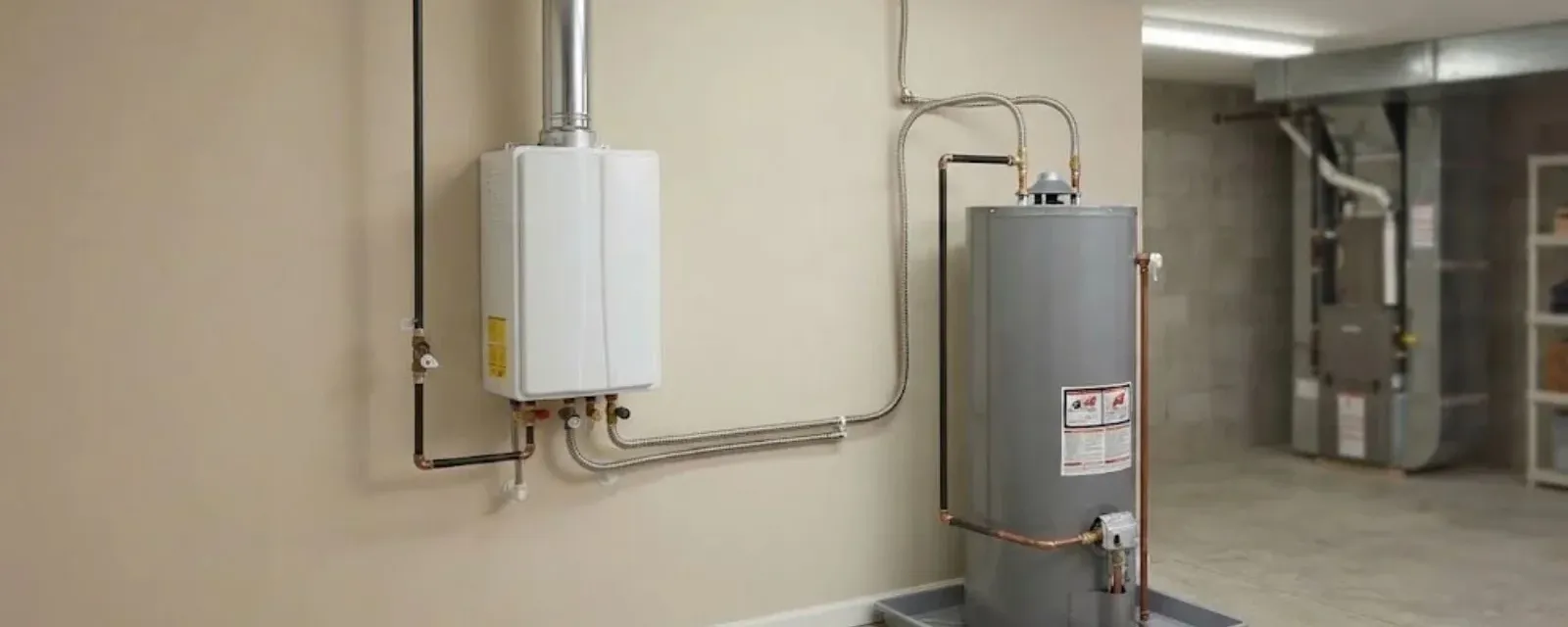
Yes, a 13 kW electric tankless water heater can work in a home, but only if the electrical system can carry the load. Thirteen thousand watts at 240 volts is about 54 amps of draw. That means the breaker, the wire from the panel and the available space in the panel decide the answer before the plumbing does.
The heater itself is a plumbing and electrical job together. A plumber handles the water side, and a licensed electrician handles the circuit. Neither can safely skip the other's part.
The math behind 13 kW
Power in watts divided by voltage gives current in amps. Take 13,000 watts and divide by 240 volts, and the result is about 54 amps.
That number is not the breaker size. Circuits that run for long periods are usually sized with extra margin, so the required breaker and wire are larger than 54 amps would suggest. An electrician picks the exact size from the maker's instructions and the wiring rules that apply to your installation.
What your electrical system has to offer
Three things set the limit.
- Panel capacity. The service and panel must handle the added load alongside the dryer, oven, air conditioning and everything else that can run at once.
- Breaker space. A large two-pole breaker needs open slots in the panel.
- Wire path. The cable must be thick enough for the breaker and have a route from the panel to the heater.
If any of these falls short, the fix may be a panel upgrade, a new run of cable or a different heater size. Do not assume. An electrician looks at your actual panel and tells you what is possible.
Do not do this yourself
Wiring a 54-amp-class circuit is not a weekend project.
- Do not swap a smaller breaker for a larger one to make the numbers fit.
- Do not tap into an existing circuit that already serves other loads.
- Do not open the panel unless you are qualified to work in it.
- If a breaker already trips or wires feel hot, call a professional right away.
What a plumber and an electrician each do
| Task | Who handles it | Why it matters |
|---|---|---|
| Check panel and available breaker space | Electrician | Decides if the load fits at all |
| Run cable and set the breaker | Electrician | Wire and breaker size must match |
| Mount heater and connect water lines | Plumber | Leaks and valve placement |
| Install isolation valves and relief discharge | Plumber | Allows flushing and safe discharge |
| Final power-up and flow check | Plumber and electrician | Confirms the system works together |
Planning the two trades together avoids a day where the plumber is ready but the circuit is not, or the other way around. Mention both needs on the first call.
What 13 kW can realistically deliver
An electric tankless heater warms water as it flows, and its output is limited by the power it can draw. The same 13 kW can raise a small flow a long way or a large flow only a little. How much depends on the temperature of the water coming in and how many fixtures are open at once.
That means a household that runs two showers and a dishwasher together may find a single unit short. Check the maker's flow chart against your incoming water and your busiest hot water moment. If it comes up short, a larger unit, a second unit or a different type of heater may suit better.
Wondering if tankless fits?
Call (208) 679-8357, describe what you have now, and ask what a plumber would check first.
Questions to settle before you buy
Buy the heater last, not first. A short checklist keeps you from owning a unit your house cannot power.
- Where is the panel, and does it have open slots for a large two-pole breaker?
- How far is the cable run from the panel to the heater location?
- What is the busiest hot water moment in your home, and how many fixtures run then?
- Is there room on the wall for the unit, clearance around it and a place for the relief discharge?
- Who is pulling the permit, and does the electrical side need its own sign-off?
Answering these on paper before anyone comes out makes the visit faster. It also shows quickly whether a 13 kW model is the right size or whether a smaller or larger one fits better.
Maintenance and what to expect
Tankless heaters need periodic flushing to clear mineral scale. Skipping that step shortens the life of the heating elements and can lower output over time.
Installing isolation valves at the start makes flushing simple. If your current tank needs help before you decide, water heater repair can keep it going while you plan. If you are ready to move on, water heater installation covers the swap itself.
What Kuna homeowners should know before going electric
Idaho Power is the electric utility serving Kuna. If your project may change your electrical load, ask how that affects your service, since a bigger load and panel changes are decisions to confirm before you buy the heater.
All of southern Idaho has hard water because of naturally occurring calcium, according to the City of Kuna's 2021 water quality report. Hard water leaves scale on heating elements, so plan for an annual flush and isolation valves from day one.
Water heater replacement is listed on the City of Kuna plumbing permit application, and the Kuna Building Department at (208) 922-5546 can tell you what applies to your project.
Source: City of Kuna CCR
Questions about 13 kW tankless heaters
About 54 amps at 240 volts, found by dividing 13,000 watts by 240 volts. The breaker and wire are sized larger than that by an electrician.
Rarely without changes. Tank heaters use much less power, so the old circuit is usually too small. Have the panel checked.
It depends on incoming water temperature and how many fixtures run together. Compare the maker's flow chart to your busiest hot water use.
Both. The plumber handles water lines and valves, while the electrician handles the circuit. Coordinating them saves a repeat visit.
Idaho Power supplies electricity in Kuna. Contact them if you want to ask about service changes before an upgrade.
Serving Kuna and nearby towns
We help Kuna homeowners compare tank and tankless options and coordinate the plumbing side of the work. If you live in the Nampa plumber area, call us there as well, and see the service area page for the other towns we cover.